

If you are wondering how to build muscle for beginners, the process is simpler than it may seem. You do not need an advanced bodybuilding routine, a complicated diet, or a large collection of supplements to get started. Building muscle comes down to consistently challenging your muscles, eating enough nutritious food, getting adequate protein, recovering properly, and giving your body enough time to adapt.
Muscle growth, also called muscle hypertrophy, is a gradual process. Your results will depend on factors such as your training experience, nutrition, recovery, genetics, and consistency. The goal for a beginner should not be to find a shortcut, but to build sustainable habits around training, food, and recovery. Understanding how to build muscle for beginners starts with learning how training, nutrition, and recovery work together.
This beginner muscle building guide will explain the fundamentals you need to understand before moving into more advanced training and nutrition strategies. If you are learning how to build muscle for beginners, these fundamentals give you a practical starting point.
Before beginning a new exercise program, especially if you have a health condition, injury, or other medical concern, consider speaking with a doctor or qualified healthcare professional.
How Muscle Growth Works
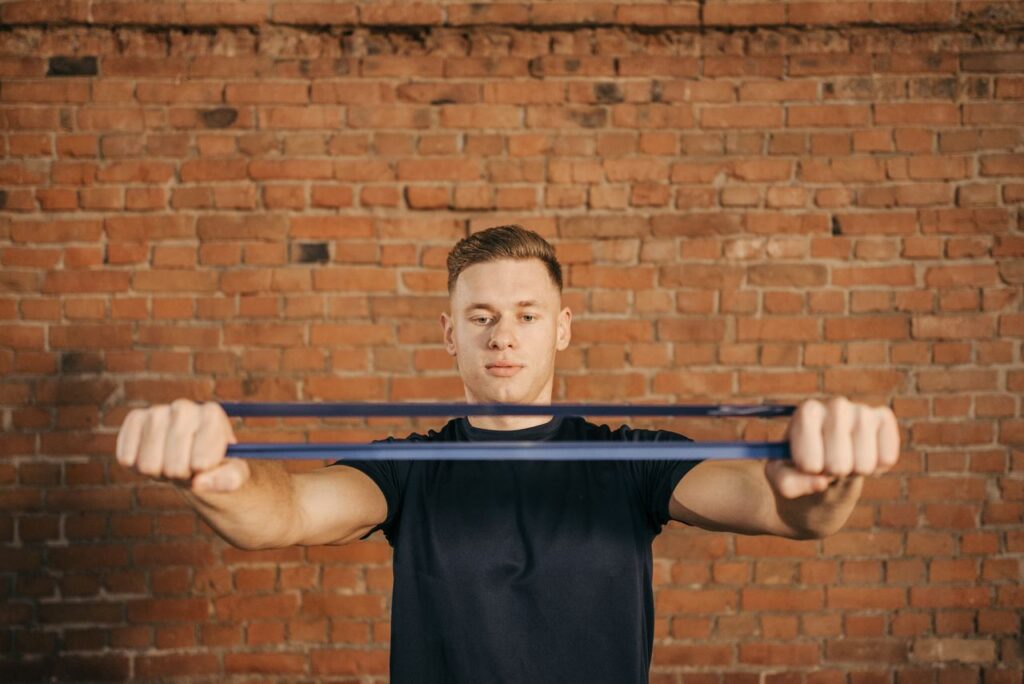
Understanding what happens when you train can make the muscle-building process much easier to follow. Knowing how to build muscle for beginners also means understanding why resistance training needs to be combined with proper recovery and nutrition.
What Is Muscle Hypertrophy?
Muscle hypertrophy refers to an increase in the size of muscle fibers. Resistance training provides a stimulus that challenges your muscles, and your body adapts to that stimulus over time.
When you consistently expose your muscles to an appropriate training challenge, your body has a reason to become better prepared for that challenge. With appropriate nutrition and recovery, these adaptations can contribute to increased muscle size and strength.
This is why muscle building is not simply about lifting the heaviest weight possible. The goal is to provide a productive stimulus that you can recover from and repeat consistently. For anyone learning how to build muscle for beginners, the quality and consistency of the training stimulus matter more than simply chasing heavier weights.
Muscle Breakdown, Repair, and Adaptation
A simple way to understand the process is:
Training → Recovery → Adaptation
During resistance training, your muscles experience mechanical tension and other forms of stress. After training, your body begins recovering from that session. With sufficient nutrition and rest, your muscles can adapt to become stronger and better prepared for future training.
This does not mean that you need to make every workout extremely difficult or train until you are completely exhausted.
Muscle soreness is also not a reliable measure of muscle growth. A workout can be productive without leaving you extremely sore the next day.
Why Consistency Matters
Muscle growth happens through repeated exposure to a training stimulus over time.
One excellent workout will not transform your physique, just as missing one workout will not destroy your progress. What matters is what you consistently do over many weeks and months.
For beginners, consistency also provides an opportunity to learn proper technique, understand how exercises feel, track progress, and gradually improve performance.
Think of muscle building as a long-term process rather than a short-term challenge. This long-term mindset is one of the most important parts of learning how to build muscle for beginners.
Core Training Principles for Building Muscle

You do not need an advanced bodybuilding program to start building muscle. When learning how to build muscle for beginners, focus first on simple training principles that you can apply consistently. Understanding a few fundamental training principles is more important than constantly searching for new exercises.
Progressive Overload
Progressive overload means gradually increasing the challenge placed on your muscles over time.
Progress can come from several factors, including:
- Increasing the weight used
- Performing additional repetitions
- Improving exercise technique
- Increasing training volume appropriately
- Improving control and range of motion
- Gradually progressing to a more challenging variation
Progressive overload does not mean increasing the weight during every workout.
For example, if you previously performed an exercise with poor control but can now perform the same movement with better technique and more controlled repetitions, that is meaningful progress.
The goal is to gradually give your muscles a reason to continue adapting without sacrificing exercise quality. This is a key principle for anyone learning how to build muscle for beginners through resistance training. Evidence from a large review of resistance-training studies supports resistance training as an effective way to improve muscle strength and hypertrophy, with different training prescriptions offering useful options depending on the goal.
Choosing a Beginner Workout Split
A beginner workout split is simply a way of organizing your training sessions.
Three common approaches are:
Full-body training:
Each session trains several major muscle groups. This can be a practical option for beginners because it allows them to practice important movements regularly without requiring many training days.
Upper/lower split:
Training is divided between upper-body and lower-body sessions. This allows you to organize training around different muscle groups while providing recovery between similar sessions.
Push-pull-legs:
Training is organized around pushing movements, pulling movements, and leg-focused training. It can work well for some people, but beginners should not assume that a more complicated split automatically produces better results.
The best structure depends on your schedule, experience, recovery, preferences, and ability to remain consistent. Choosing a sustainable routine is an important part of understanding how to build muscle for beginners. For a practical starting routine, see our Muscle Building Workout for Beginners guide.
Exercise Selection and Movement Quality
Beginners should learn the basic movement patterns involved in resistance training and become comfortable performing exercises with appropriate technique.
Your training can include both compound exercises, which involve multiple joints and muscle groups, and isolation exercises, which place greater emphasis on individual muscles.
You do not need dozens of exercises to build muscle.
A sensible training approach should cover the major muscle groups and allow you to progressively improve your performance without making your routine unnecessarily complicated. For people learning how to build muscle for beginners, this simple approach is often easier to maintain than an unnecessarily complicated routine.
Form and the Mind-Muscle Connection
Good technique allows you to control an exercise and place the intended muscles under an appropriate training stimulus.
Avoid using more weight than you can control simply to make the numbers look better. Ego lifting can compromise technique and make an exercise less effective.
The mind-muscle connection can also help you become more aware of the muscle you are training. However, it should complement—not replace—good exercise selection, progressive overload, and consistent training.
Nutrition & Macro Strategy for Muscle Growth

Training provides the stimulus for muscle growth, but nutrition provides the energy and nutrients your body needs to support training, recovery, and adaptation. Learning how to build muscle for beginners therefore requires understanding both training and the nutritional support needed for growth.
A good muscle building diet does not have to be complicated. If you are learning how to build muscle for beginners, your nutrition should support your training without making your daily routine unnecessarily difficult.
Beginners should first focus on adequate food intake, sufficient protein, nutritious food choices, and overall dietary consistency.
Do You Need a Calorie Surplus to Build Muscle?
A calorie surplus means consuming more energy than your body uses.
For people specifically trying to maximize muscle gain, a calorie surplus can provide additional energy to support the process. However, eating significantly more food than your body needs does not mean that you will build muscle at the same rate.
Excessive calorie intake can result in unnecessary fat gain.
This is why beginners should think about gaining muscle in a controlled way rather than simply trying to make body weight increase as quickly as possible. This controlled approach is an important part of learning how to build muscle for beginners without gaining unnecessary body fat.
Beginners may also experience changes in muscle and body composition without deliberately pursuing a large calorie surplus, particularly when they are new to resistance training.
Lean Bulk vs Dirty Bulk
A lean bulk generally refers to gaining muscle while keeping unnecessary fat gain under control by using a relatively modest calorie surplus.
A dirty bulk generally involves eating very large amounts of food with less concern about food quality or fat gain.
The idea that you must eat enormous amounts of food to build muscle is a common misconception.
Muscle building is not a race to gain as much body weight as possible. The objective is to provide your body with enough energy and nutrients to support productive training and growth.
Protein for Muscle Growth
Protein provides amino acids that your body uses for many functions, including maintaining and building muscle tissue. Adequate protein is one of the basic nutrition principles to understand when learning how to build muscle for beginners.
Useful protein-rich foods include:
- Eggs
- Milk and other dairy products
- Greek yogurt
- Fish
- Chicken and other lean meats
- Beans and lentils
- Soy foods
- Other protein-rich plant foods
For people who regularly perform resistance training, a commonly used protein range is roughly 1.6–2.2 grams per kilogram of body weight per day, although individual needs can vary. Research has also found that adequate protein intake can support gains in muscle mass and strength when combined with resistance training.
You do not need to make every meal perfect. Consistently getting adequate protein throughout your overall diet is more important than obsessing over a single meal.
Carbohydrates and Fats
Carbohydrates can provide an important source of energy for training. Foods such as rice, oats, potatoes, fruits, whole grains, and other carbohydrate-rich foods can fit into a muscle-building diet.
Dietary fats are also important for a balanced diet and support several normal bodily functions.
Rather than completely eliminating one macronutrient, beginners should focus on eating a balanced diet that provides adequate protein, carbohydrates, fats, vitamins, minerals, and overall energy.
Hydration
Hydration is another basic part of supporting training performance.
Your fluid requirements depend on factors such as your activity level, climate, body size, and how much you sweat. Make regular hydration part of your daily routine, particularly around exercise.
Recovery & Sleep

Training is only one part of building muscle.Anyone learning how to build muscle for beginners should understand that rest & recovery for muscle growth is just as important as creating a training stimulus.
Trying to train harder and harder without considering recovery can make your progress more difficult.
Why Recovery Matters for Muscle Growth
Training creates a stimulus, while recovery gives your body an opportunity to repair and adapt.
This is why more training is not automatically better. Understanding this principle can make it easier to learn how to build muscle for beginners without unnecessarily increasing training demands.
Recovery can be affected by several factors, including:
- Sleep
- Nutrition
- Training volume
- Stress
- Daily activity
- Individual recovery capacity
A good beginner approach should challenge your muscles while still allowing you to recover between training sessions.
Sleep and Muscle Growth
Sleep is an important part of physical recovery and overall health. For beginners learning how to build muscle for beginners, consistent sleep should be treated as part of the overall process rather than an optional extra.
Most adults generally benefit from around 7–9 hours of sleep per night, although individual needs can vary.
Consistently poor sleep can make it harder to maintain energy, training performance, and healthy routines. Treating sleep as part of your muscle-building process can therefore help you stay consistent. Research also suggests that inadequate sleep can negatively affect performance during resistance exercise, particularly for demanding compound movements.
Rest Days
Rest days are part of a training plan, not time wasted.
Your muscles and other systems involved in exercise need time to recover. Depending on your routine, a rest day may involve complete rest or normal daily movement without demanding resistance training.
The important point is that you do not need to train every day to build muscle.
Essential Supplements for Beginners

Supplements should be viewed as optional additions to a strong foundation of training, nutrition, and recovery. When learning how to build muscle for beginners, it is important to understand that supplements come after the fundamentals, not before them.
You do not need a large supplement collection to build muscle. The basics of how to build muscle for beginners remain training, nutrition, recovery, and consistency.
Whey Protein
Whey protein is simply a convenient source of dietary protein.
It can be useful if you have difficulty getting enough protein from regular foods, but it is not mandatory.
If your normal diet already provides enough protein, adding whey is not required simply because you are trying to build muscle.
Creatine Monohydrate
Creatine monohydrate is one of the most widely used supplements among people involved in resistance training.
Creatine is stored in muscle and contributes to the energy system used during short, high-intensity activities such as resistance training.
It should be viewed as an optional supplement rather than a replacement for good training and nutrition.
People with medical conditions or concerns about supplementation should discuss it with an appropriate healthcare professional.
Multivitamins and Omega-3s
Multivitamins and omega-3 supplements may be useful in certain situations depending on an individual’s diet and nutritional needs.
However, they should not be treated as essential muscle-building supplements for everyone.
A varied, nutritious diet should remain the foundation.
How to Stay Consistent While Building Muscle

Knowing what to do is only one part of the process. Learning how to build muscle for beginners is ultimately about turning these principles into habits you can maintain. Following your plan consistently is what allows your body to adapt over time.
Track Your Progress
Tracking your progress can help you understand whether your approach is working. Tracking is especially useful when learning how to build muscle for beginners because progress can be gradual and difficult to notice from day to day.
Useful things to monitor include:
- Weights and repetitions
- Exercise performance
- Body weight trends
- Body measurements
- Progress photographs
- Training consistency
Do not rely entirely on the number on the scale.
For example, your body weight may not change dramatically while your strength, measurements, and physique gradually improve.
Look at trends over time rather than reacting to one day’s result.
What to Do When Progress Slows Down
Progress will not always happen at the same speed.
Before completely changing your approach, consider whether you have been:
- Training consistently
- Progressively challenging yourself
- Eating enough
- Getting sufficient protein
- Sleeping adequately
- Recovering between sessions
- Following your routine long enough to evaluate it
A temporary slowdown does not automatically mean your entire approach has failed.
Sometimes the issue is inconsistent training, insufficient nutrition, poor recovery, or unrealistic expectations.
Motivation vs Discipline
Motivation naturally changes.
There will be days when you feel excited about training and days when you would rather skip it. Building sustainable habits makes it easier to continue when motivation is low.
Create a routine that fits your lifestyle rather than relying on motivation alone.
The best approach is one you can realistically maintain.
Common Beginner Muscle-Building Mistakes

Ego Lifting
Using more weight than you can properly control is a common beginner mistake.
Muscle building is not a competition to see who can lift the heaviest weight. Appropriate resistance combined with good technique is more useful than simply chasing bigger numbers.
Changing Programs Too Often
Beginners sometimes change programs every few weeks because they believe another routine will produce faster results.
Constantly changing exercises, splits, and training strategies makes it difficult to determine what is actually working.
Give a sensible approach enough time to evaluate your progress before making major changes. Patience is essential when learning how to build muscle for beginners because meaningful physical changes take time.
Neglecting Nutrition
Training consistently while consistently under-eating can make gaining muscle more difficult.
Your diet does not need to be perfect, but it should provide adequate protein, energy, and overall nutrition to support your goals.
Ignoring Recovery
Some beginners assume that more training automatically means more muscle.
Recovery is part of the process. If your training schedule leaves you constantly exhausted and unable to perform well, simply adding more workouts may not be the answer.
Expecting Fast Results
Muscle growth takes time.
Social media can make transformations appear much faster than they actually are, while factors such as lighting, posing, training experience, and individual genetics can influence how someone looks.
Instead of chasing rapid transformations, focus on improving your technique, gradually increasing performance, eating appropriately, and staying consistent.
FAQ: How to Build Muscle for Beginners
How long does it take for beginners to build muscle?
The timeline varies from person to person. Training experience, genetics, nutrition, recovery, age, and consistency all influence results. Beginners may notice improvements in strength relatively quickly, while visible changes in muscle size generally require more time and consistent training.
Can beginners build muscle without supplements?
Yes. Supplements are not required to build muscle. Resistance training, adequate protein and overall nutrition, sufficient recovery, and consistency form the foundation. Supplements can be used for convenience or specific purposes, but they are not a substitute for the basics.
How many days a week should a beginner train to build muscle?
There is no single number that works for everyone. Beginners can make progress with several resistance-training sessions per week when the routine is appropriate for their experience and recovery. The important thing is to train consistently while giving your body enough time to recover.
Do you need to eat more to build muscle?
You need adequate energy and nutrients to support muscle growth. A calorie surplus can be useful when trying to maximize muscle gain, but eating excessively is unnecessary. A controlled approach is generally more appropriate than simply trying to gain body weight as quickly as possible.
Can you build muscle and lose fat at the same time?
Yes, body recomposition can occur in some circumstances. Beginners, people returning to resistance training, and some individuals with higher levels of body fat may experience muscle gain while losing fat. However, the outcome varies between individuals and depends on factors such as training, nutrition, starting body composition, and consistency.
Conclusion: Start Building Muscle One Step at a Time
Learning how to build muscle for beginners does not require mastering every advanced bodybuilding technique.
The foundation is straightforward:
- Train consistently with resistance.
- Apply progressive overload gradually.
- Use good exercise technique.
- Eat enough nutritious food.
- Consume adequate protein.
- Give your body enough time to recover.
- Prioritize quality sleep.
- Treat supplements as optional rather than essential.
- Track your progress and make changes patiently.
The biggest mistake beginners can make is turning a simple process into something unnecessarily complicated.
You do not need the perfect workout, the perfect diet, or an enormous supplement stack to start. You need a sustainable approach that you can follow consistently.
Start with the fundamentals, learn how your body responds, and improve gradually. If you stay consistent with the fundamentals, learning how to build muscle for beginners becomes a much more manageable and sustainable process. As your experience increases, you can explore more detailed training, nutrition, and recovery strategies.
Building muscle is a long-term process, but every productive workout, balanced meal, adequate night’s sleep, and consistent week contributes to the bigger picture.