
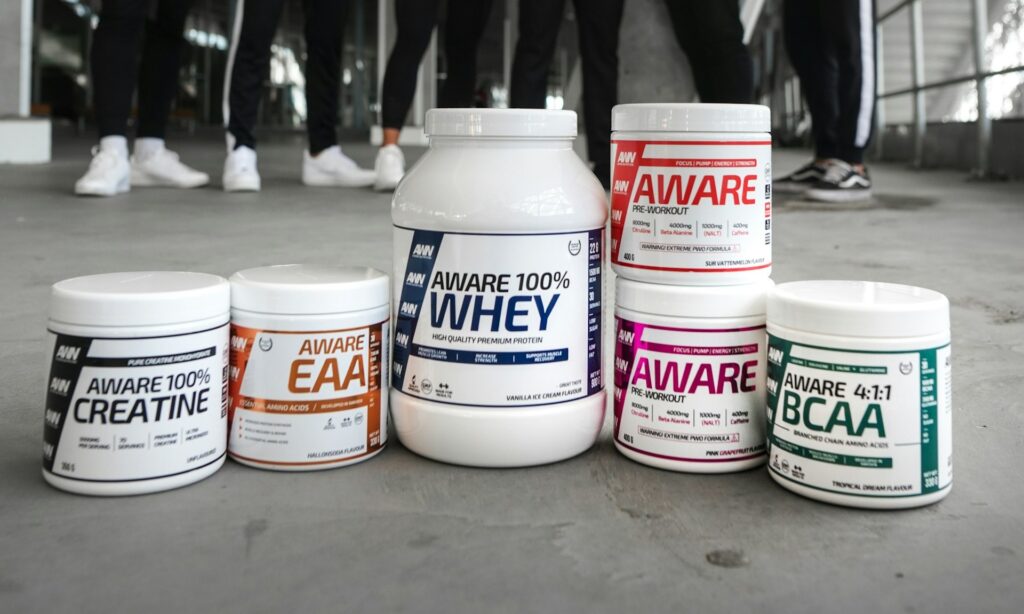
Starting a muscle-building journey can quickly become confusing when you see shelves full of powders, capsules, pre-workouts, and products promising faster results. The good news is that you do not need a large supplement stack to start making progress. The Best Supplements for Beginner Muscle Gain should support a solid training program, adequate nutrition, sufficient protein, and good recovery—not replace them.
For most beginners, supplements are optional tools. Some have strong evidence behind them, while others are mainly useful in specific situations. The goal of this guide is to help you understand which products are worth considering, which ones are simply convenient, and which ones you can usually skip.
Safety note: This article provides general educational information and is not individualized medical advice. Speak with a doctor or qualified healthcare professional before starting supplements, especially if you have a medical condition, take medications, are pregnant or breastfeeding, or are under 18.
Do Beginners Need Supplements to Build Muscle?
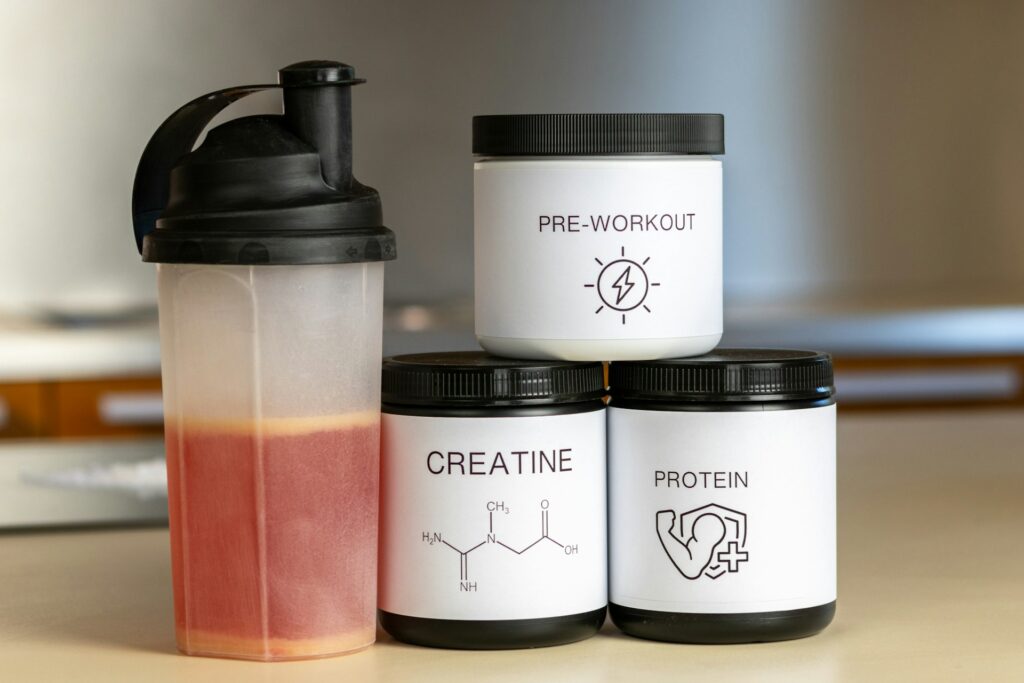
No. Beginners can build muscle without supplements.
The foundation of muscle growth is resistance training combined with adequate nutrition and recovery. Supplements can sometimes make those basics easier to manage, but they cannot replace them.
A useful priority order is:
- Resistance training
- Adequate calories and overall nutrition
- Enough protein
- Recovery and sleep
- Supplements when they provide a specific benefit
This is the most important thing to understand before choosing the Best Supplements for Beginner Muscle Gain.
Food, Training, and Recovery Come First

Your body needs an appropriate training stimulus to adapt and become stronger. It also needs enough energy, protein, vitamins, minerals, and other nutrients to support normal physiological processes.
Recovery matters too. Training provides the stimulus, but adaptation occurs during the recovery process.
That means buying an expensive supplement while consistently missing workouts, eating too little, or sleeping poorly is unlikely to solve the underlying problem.
For a detailed look at whole-food choices that can support a muscle-building diet, explore our guide to Best Foods for Muscle Gain.
What Supplements Can and Cannot Do
Supplements can provide specific nutrients or compounds in a convenient form.
For example:
- Protein powder can make it easier to reach your daily protein intake.
- Creatine can support repeated high-intensity exercise performance.
- Caffeine can improve alertness and may support exercise performance.
- Certain vitamins or minerals can help address inadequate intake when appropriate.
But supplements cannot turn an ineffective training program into an effective one. They also cannot compensate for consistently inadequate nutrition or recovery.
That is why the best muscle-building approach is not about taking more products. It is about identifying whether a supplement actually solves a problem.
Necessary vs Useful vs Optional
A simple framework for evaluating the Best Supplements for Beginner Muscle Gain is to divide products into four groups.
Necessary: No supplement is universally necessary for every beginner.
Useful: Creatine and protein powder can be useful for many people, although neither is mandatory.
Situational: Vitamin D, omega-3s, multivitamins, and electrolytes may be useful depending on diet, lifestyle, exercise demands, or individual needs.
Optional or low priority: BCAAs, many performance blends, and products marketed as testosterone boosters generally deserve less attention.
This approach prevents beginners from confusing “available” with “necessary. Using this framework makes it easier to identify the Best Supplements for Beginner Muscle Gain without turning supplementation into an unnecessarily complicated routine.
How to Choose the Best Supplements for Beginner Muscle Gain
Choosing a supplement should start with the ingredient and its purpose—not the appearance of the container.
Before purchasing, ask yourself a few simple questions.

Look at the Evidence
First, determine whether there is credible research supporting the ingredient for the specific benefit being advertised. The Best Supplements for Beginner Muscle Gain should have a clear purpose that can be connected to credible evidence rather than simply a persuasive marketing claim.
An ingredient may have evidence for one purpose but not another. For example, evidence that an ingredient supports exercise performance does not automatically mean that it directly causes large increases in muscle mass.
The NIH Office of Dietary Supplements is one useful authoritative resource for checking information about exercise and athletic-performance supplements.
Check the Actual Dose and Serving Size
Look beyond the number of servings on the front of the package.
Check:
- Amount of active ingredient per serving
- Recommended serving size
- Number of servings per container
- Whether the amount is clearly disclosed
A product containing many ingredients is not automatically better.
Avoid Proprietary Blends
A proprietary blend may list several ingredients without clearly showing how much of each ingredient is included.
That makes it difficult to compare products or determine whether a meaningful amount of an ingredient is present.
For beginners, transparent labels are generally easier to evaluate.
Compare Price Per Serving
A low sticker price does not necessarily mean a product is inexpensive.
Compare the total price with the number of meaningful servings. Also consider whether you are actually getting an ingredient and dose that you intended to buy.
The Best Supplements for Beginner Muscle Gain should also make sense for your budget. Spending heavily on supplements while neglecting basic food and training is usually the wrong priority.
Consider Third-Party Testing
Third-party testing can provide additional quality assurance. Programs from organizations such as NSF or USP can provide information about independent testing and product quality.
Athletes subject to anti-doping rules may also want to consider sport-specific certification programs designed to reduce the risk of prohibited-substance contamination.
Testing does not guarantee that a supplement will work for you, but it can provide useful additional information about product quality.
Be Skeptical of Marketing Claims
Be careful with products promising:
- Rapid muscle gain
- Dramatically increased testosterone
- Instant strength
- Steroid-like results
- Guaranteed results
- “Revolutionary” muscle growth
Good supplement decisions are based on evidence, not exaggerated promises.
Best Supplements for Beginner Muscle Gain: Evidence Overview
Not every supplement deserves the same level of attention. The Best Supplements for Beginner Muscle Gain are therefore easier to identify when you compare their evidence, purpose, and practical value instead of treating every supplement equally.
| Supplement | Strength of Evidence | Main Benefit | Beginner Priority |
|---|---|---|---|
| Creatine monohydrate | Strong | Supports high-intensity training performance | Useful |
| Protein powder | Strong as a protein source | Helps meet daily protein needs | Useful |
| Caffeine | Strong for exercise performance | Alertness and performance support | Situational |
| Vitamin D | Depends on individual status | Helps address inadequate intake/status | Situational |
| Omega-3 | Moderate/situation-dependent | Provides EPA/DHA | Situational |
| Multivitamin | Situation-dependent | Helps address some dietary gaps | Situational |
| Beta-alanine | Moderate for certain exercise demands | May support high-intensity performance | Optional |
| Citrulline | Mixed | May support aspects of exercise performance | Optional |
| Electrolytes | Situation-dependent | Replaces fluids/electrolytes when needed | Situational |
| BCAAs | Limited when protein intake is adequate | Provides selected amino acids | Low Priority |
| Mass gainers | Mainly calorie convenience | Makes higher calorie intake easier | Situational |
| Testosterone boosters | Weak/inconsistent | Limited reliable evidence | Low Priority |
This table is a starting point rather than a shopping list. The right choice depends on what your diet, training, and individual circumstances actually require.
Creatine Monohydrate
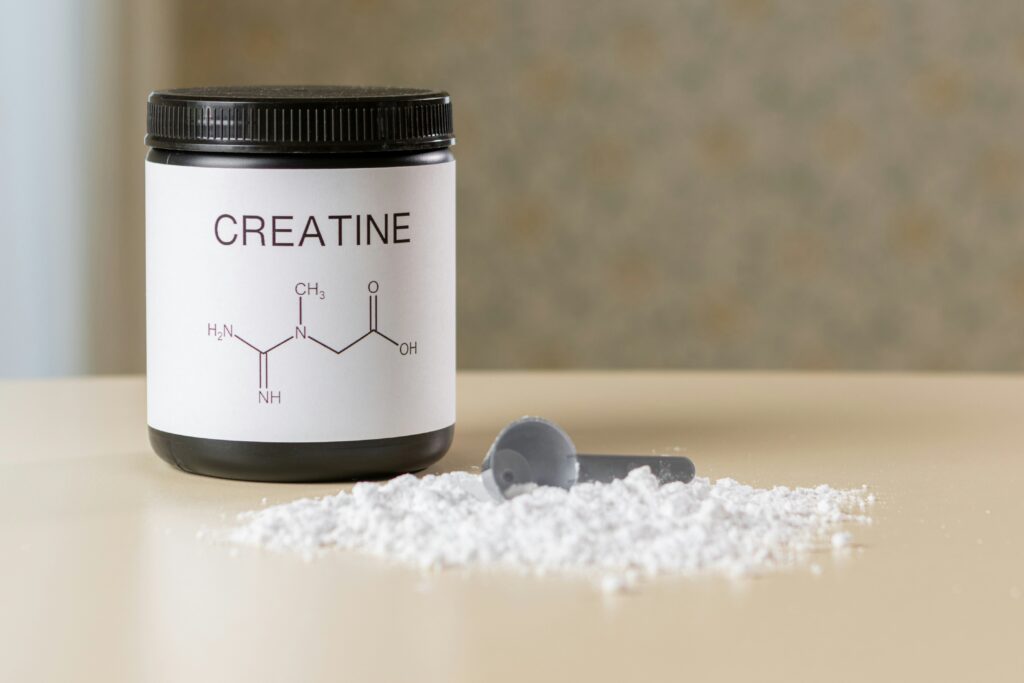
When people ask about the Best Supplements for Beginner Muscle Gain, creatine monohydrate is usually one of the first evidence-supported options worth discussing.
Creatine is a naturally occurring compound involved in energy production during short, high-intensity efforts. Supplementation increases the amount of creatine stored in muscle and can support performance during repeated high-intensity exercise.
When combined with resistance training, this can support improvements in training performance and lean mass over time.
What Is Creatine?
Creatine is found naturally in foods such as meat and fish and is also produced by the body.
Creatine monohydrate is the most extensively studied supplemental form. There are many alternative forms marketed as superior, but more complicated does not automatically mean better.
How Does Creatine Work?
Muscles use phosphocreatine as part of the system that rapidly regenerates ATP, an important source of energy during high-intensity activity.
Supplementation increases muscle creatine stores. This can help support repeated high-intensity efforts, which is particularly relevant to resistance training.
Creatine does not directly “build muscle” without training. Its value comes from supporting the training process.
What Are the Benefits?
Research supports creatine supplementation for improving certain aspects of strength and high-intensity exercise performance. When used alongside resistance training, it can contribute to increases in lean mass.
However, individual responses vary.
There is no responsible reason to promise a specific amount of muscle or strength gain from creatine.
How Much Creatine Should Beginners Take?
A commonly used general amount is approximately:
3–5 grams of creatine monohydrate per day.
A loading phase can be used to increase muscle creatine stores more quickly, but it is optional.
Beginners do not need to load creatine to benefit from it. A consistent daily approach is simpler and easier to follow. For beginners, creatine monohydrate remains one of the most practical options to consider when evaluating the Best Supplements for Beginner Muscle Gain.
When Should You Take Creatine?
Exact timing is not the most important factor.
You can take creatine:
- With water
- With a protein shake
- With a meal
- Before training
- After training
- At another convenient time
Consistency is more important than finding a perfect minute on the clock.
Does Creatine Cause Water Weight?
Creatine can increase water stored within muscle cells, particularly during the early stages of supplementation.
This can cause the scale to increase somewhat, but that does not mean the increase is body fat.
Understanding this distinction can prevent beginners from unnecessarily stopping a supplement because of normal changes in body weight.
Is Creatine Safe for Beginners?
Creatine monohydrate has been extensively researched and is generally well tolerated when used appropriately by healthy adults.
However, anyone with a medical condition, taking medication, or with concerns about kidney or other health issues should speak with a healthcare professional before using it.
The Best Supplements for Beginner Muscle Gain should always be evaluated in the context of the person taking them—not just the ingredient’s reputation.
Protein Powder for Beginner Muscle Gain
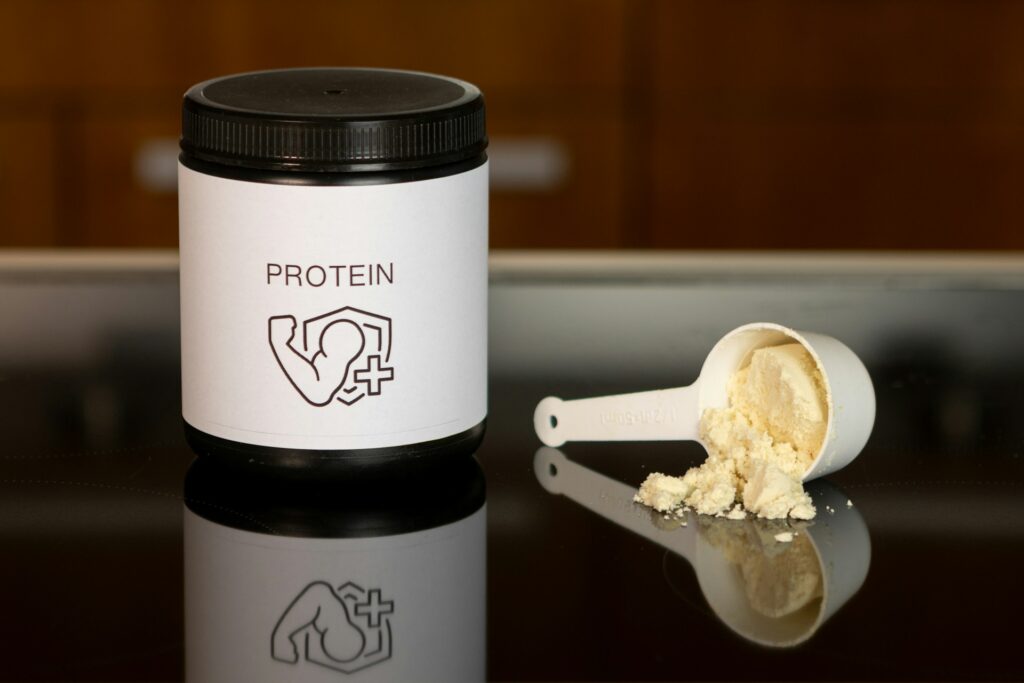
Protein powder is another practical option, but it is important to understand what it actually does.
Protein powder is primarily a convenient source of protein. It is not a magic muscle-building substance. That distinction is important when comparing the Best Supplements for Beginner Muscle Gain, because convenience and nutritional usefulness matter more than exaggerated muscle-building claims.
Research also supports the importance of adequate protein intake for muscle recovery and adaptation. If you already consume enough protein through foods, you may not need it.
Do Beginners Actually Need Protein Powder?
No.
Protein powder becomes useful when it makes meeting your overall protein needs easier.
For example, it can help if:
- You have a busy schedule.
- You struggle to prepare protein-rich meals.
- You need a convenient snack.
- You have difficulty consuming enough protein from food.
- Your dietary pattern makes convenient protein intake more challenging.
The purpose is convenience—not replacing your entire diet.
Whey Protein
Whey is a milk-derived protein that provides a high-quality protein source and is widely used in sports nutrition.
It is available in different forms, including whey concentrate and whey isolate.
People with lactose intolerance may tolerate some forms better than others, although individual responses vary.
Casein Protein
Casein is another milk-derived protein.
It is commonly described as a slower-digesting protein compared with whey. It can be a convenient option for people who enjoy it, but beginners do not need to obsess over choosing between protein types.
Plant-Based Protein
Plant-based protein powders can also be useful.
Common options include:
- Soy
- Pea
- Rice
- Blended plant proteins
The best choice depends on dietary preferences, allergies, tolerance, availability, and budget.
How Protein Powder Fits Into Your Diet
Think about your total daily protein intake rather than treating every shake as a special muscle-building event.
A protein shake can be consumed:
- With breakfast
- Between meals
- After training
- As part of a smoothie
- Whenever it helps you meet your nutritional needs
There is no requirement to consume protein immediately after your workout to make progress.
For beginners comparing the Best Supplements for Beginner Muscle Gain, protein powder should be viewed as a convenience tool that helps support an adequate diet.
Caffeine and Pre-Workout Supplements

Caffeine is one of the most widely used performance-related ingredients.
It can increase alertness and may improve aspects of exercise performance for some people.
However, caffeine is not required for muscle growth.
What Caffeine Can Do for Training
Caffeine can help some people feel more alert and prepared for training.
It may be particularly useful when fatigue or demanding training sessions affect exercise performance.
But the response is individual. Some people are more sensitive to caffeine than others.
Common Sources of Caffeine
Caffeine can come from:
- Coffee
- Tea
- Energy drinks
- Caffeine tablets
- Pre-workout products
You do not automatically need a dedicated pre-workout supplement simply because you are beginning a muscle-building program.
Timing and Tolerance
The appropriate timing depends on the individual, the product, and the training schedule.
Regular caffeine use can also influence tolerance.
Beginners should pay attention to how caffeine affects them rather than automatically increasing the amount.
Caffeine, Sleep, and Recovery
This is especially important.
If caffeine taken later in the day interferes with sleep, the short-term training boost may not be worth the recovery cost.
Good sleep is part of the muscle-building process.
Why Beginners Should Be Careful With High-Stimulant Pre-Workouts
Many pre-workout products combine caffeine with several other ingredients.
That can make it difficult to determine what you are consuming and whether you actually need each ingredient.
For a beginner, a simpler approach is generally easier to understand and manage. This is also why the Best Supplements for Beginner Muscle Gain do not necessarily include a complicated pre-workout stack.
Situation-Dependent Supplements
Some products may be useful for nutritional reasons rather than because they directly increase muscle growth.
Vitamin D
Vitamin D supplementation may be appropriate when someone has inadequate vitamin D status or has a specific reason to require supplementation.
It should not automatically be treated as a muscle-building supplement.
If you suspect a deficiency, discuss testing and supplementation with a healthcare professional.
Omega-3
Omega-3 supplements can provide EPA and DHA.
They may be relevant for people whose diets provide little of these fatty acids.
The decision should be based on overall dietary intake and individual circumstances rather than the belief that omega-3 is required for muscle growth.
Multivitamins
A multivitamin may help fill certain nutritional gaps for some people.
But it should not be used as a replacement for a varied diet.
Taking more vitamins is not automatically better.
Electrolytes
Electrolytes can be useful when substantial fluid and electrolyte losses occur, such as during prolonged or very sweaty exercise.
For many ordinary resistance-training sessions, a specialized electrolyte product may not be necessary.
Overhyped or Low-Priority Supplements
A large supplement market does not mean every product deserves a place in your routine.
BCAAs
BCAAs are three essential amino acids: leucine, isoleucine, and valine.
They are frequently marketed for muscle growth, but if your overall protein intake is already adequate, BCAAs are generally a low priority.
A complete protein source provides a broader range of amino acids. For most beginners, this makes BCAAs a much lower priority than the Best Supplements for Beginner Muscle Gain with stronger practical evidence.
Mass Gainers
Mass gainers can make it easier to consume more calories.
That can be useful for someone who genuinely struggles to eat enough.
But they are not uniquely capable of building muscle.
If you can comfortably obtain the required calories through normal foods and homemade shakes, a commercial mass gainer may not be necessary.
Testosterone Boosters
Testosterone boosters are commonly marketed with dramatic promises.
The evidence for many such products is limited or inconsistent, and marketing claims may be much stronger than the available evidence.
They should not be considered a foundation of a beginner muscle-building routine.
Proprietary Blends
Proprietary blends make it harder to determine exactly how much of each ingredient you are consuming.
For beginners, transparent labeling is usually preferable.
Products Promising Rapid Muscle Gain
Be cautious when a product promises dramatic results in a very short period.
Muscle development requires consistent training, nutrition, and recovery.
No supplement should be treated as a shortcut around those fundamentals.
A Simple Beginner Supplement Routine

The Best Supplements for Beginner Muscle Gain should fit into a simple routine rather than create a complicated daily schedule.
Foundation: Food + Training + Recovery
Start with:
- Adequate overall food intake
- Sufficient protein
- A structured resistance-training program
- Adequate sleep
- Consistent recovery
These are the foundation.
For the detailed training side, follow a structured Muscle Building Workout for Beginners
Useful Convenience: Protein Powder
If meeting your protein needs through regular food is difficult, add a protein powder that fits your dietary preferences and budget.
Timing: Flexible.
Use it whenever it helps you consistently meet your protein needs.
Evidence-Supported Option: Creatine
Consider creatine monohydrate if you want an evidence-supported supplement for resistance-training performance.
General amount: roughly 3–5 g per day.
Timing: Flexible.
Loading: Optional.
Situational Options
Depending on your circumstances, additional products may include:
- Vitamin D
- Omega-3
- Multivitamin
- Electrolytes
- Caffeine
These should have a reason for being included. Not every item in this list belongs in every routine, which is why the Best Supplements for Beginner Muscle Gain will vary depending on your diet, training, and individual needs.
How Long Do Supplements Take to Have an Effect?
Different supplements work differently.
Caffeine: Effects can be noticeable relatively quickly.
Protein powder: Provides protein as soon as you consume it, but muscle growth occurs through repeated training and adequate nutrition over time.
Creatine: Muscle creatine stores increase gradually with consistent supplementation.
Vitamin and mineral supplements: Their effects depend heavily on whether you had an inadequate intake or deficiency.
This is why evaluating supplements over a single workout or a few days can be misleading.
Safety and Quality Control
Safety should always be part of choosing the Best Supplements for Beginner Muscle Gain.
Follow Label Directions
Do not automatically increase the serving because you think more will produce faster results.
Follow the product directions unless a qualified healthcare professional has advised otherwise.
Avoid Mega-Dosing
Higher doses are not automatically more effective.
Excessive intake can increase the risk of unwanted effects and unnecessary spending.
Check Allergens and Ingredients
Always check the label for:
- Allergens
- Artificial or additional ingredients you may want to avoid
- Stimulants
- Total caffeine
- Ingredients that appear in multiple products
Watch for Overlapping Ingredients
If you use several supplements, compare their labels.
For example, a pre-workout and energy drink may both contain caffeine.
Taking multiple products without checking their ingredients can unintentionally increase your total intake.
Medication and Health Considerations
Supplements can interact with medications or may not be appropriate for certain health conditions.
If you take prescription medications, have a medical condition, are pregnant or breastfeeding, or have other health concerns, consult a healthcare professional before starting a supplement.
Third-Party Testing
Third-party testing can provide additional information about product identity, purity, or contamination.
This can be particularly relevant for competitive athletes who need to reduce the risk of prohibited-substance contamination.
However, certification does not guarantee that a supplement will be effective for your specific goal. Quality control is an important part of selecting the Best Supplements for Beginner Muscle Gain, particularly when you are comparing products from different manufacturers.
When to Consult a Healthcare Professional
Seek professional guidance before supplementation if you:
- Have a chronic medical condition
- Take medications
- Are pregnant or breastfeeding
- Are under 18
- Have concerns about allergies or interactions
- Are considering high-dose supplementation
“Natural” does not automatically mean safe.
Common Beginner Supplement Mistakes
Taking Too Many Supplements
You do not need a large stack to begin.
Adding many products at once makes it harder to identify what is useful and increases unnecessary spending.
Replacing Food With Supplements
Protein powder and other supplements should complement your diet.
They should not become an excuse to ignore overall dietary quality.
Expecting Supplements to Replace Training
No supplement can replace a consistent resistance-training stimulus.
Training remains the foundation.
Taking Excessive Doses
More is not always better.
Follow evidence-based general guidance and product directions rather than assuming that larger amounts produce larger results.
Overlapping Ingredients
Check all labels when using multiple products.
This is particularly important with caffeine and other stimulant ingredients.
Buying Based Only on Marketing
A long ingredient list does not prove effectiveness.
A flashy label does not replace evidence. The Best Supplements for Beginner Muscle Gain should be selected because they have a clear purpose and useful evidence, not because their packaging makes them look advanced.
Spending Too Much
The Best Supplements for Beginner Muscle Gain do not have to be the most expensive supplements.
A simple routine can often provide everything a beginner realistically needs.
Being Inconsistent
Buying a supplement and taking it occasionally while expecting dramatic results is unrealistic.
If a supplement is appropriate for you, consistency and correct use matter more than constantly switching products.
Beginner FAQ
Do beginners need supplements to build muscle?
No. Beginners can build muscle without supplements by following a suitable resistance-training program, eating enough protein and calories, and recovering adequately. Supplements are optional tools. If you do choose supplements, the Best Supplements for Beginner Muscle Gain are the ones that solve a genuine nutritional or training need rather than simply adding more products.
What are the Best Supplements for Beginner Muscle Gain?
Creatine monohydrate and protein powder are two practical options to consider. Creatine has strong evidence for supporting high-intensity training performance, while protein powder can make adequate protein intake more convenient. These options are useful for different reasons, so your choice should depend on whether you need performance support or a convenient way to meet your protein needs.
Is creatine good for beginners?
Yes, creatine monohydrate can be a reasonable option for healthy adults beginning resistance training. A commonly used general amount is around 3–5 grams per day, and a loading phase is optional.
Should beginners take protein powder?
Not necessarily. Protein powder is useful when it helps you reach your overall protein needs conveniently. If you already consume enough protein from food, you may not need it.
Do BCAAs work for muscle growth?
BCAAs are not a high priority when total protein intake is already adequate. Complete protein sources provide a broader range of essential amino acids.
Are mass gainers worth it?
They can be useful if you struggle to consume enough calories, but they are not essential for muscle growth. Regular food or homemade calorie-dense shakes can also be practical options.
Should beginners take pre-workout?
No, pre-workout is not required. Caffeine may support exercise performance for some people, but beginners do not need a high-stimulant, multi-ingredient product to build muscle.
Can I build muscle without supplements?
Absolutely. Supplements are optional. Consistent resistance training, adequate nutrition, enough protein, and recovery are the core requirements.
Are muscle-building supplements safe?
Safety depends on the specific supplement, dose, product quality, and individual circumstances. Some ingredients have extensive safety data, while others have limited evidence. Supplements can also interact with medications.
How should beginners choose supplements for muscle growth?
Start with the problem you are trying to solve. If you struggle to reach your protein needs, protein powder may help. If you want an evidence-supported training supplement, creatine may be worth considering. Avoid adding products simply because they are marketed for muscle growth.
Conclusion: Keep Your Supplement Routine Simple
The Best Supplements for Beginner Muscle Gain are not necessarily the products with the longest ingredient lists or the most aggressive marketing.
For most beginners, the hierarchy is simple. This simple approach can help you narrow down the Best Supplements for Beginner Muscle Gain without spending money on products you do not actually need.
Train consistently → eat adequately → get enough protein → recover well → consider supplements when they provide a specific benefit.
Creatine monohydrate is one of the strongest evidence-supported options to consider. Protein powder can be a convenient way to meet your protein needs when food alone is inconvenient. Caffeine may be useful for some people, while vitamin D, omega-3s, multivitamins, and electrolytes are more dependent on individual circumstances.
At the same time, BCAAs, testosterone boosters, complicated proprietary blends, and products promising rapid muscle growth should generally be much lower priorities.
You do not need a huge supplement stack to build muscle. A simple, affordable routine is often easier to understand, easier to maintain, and less likely to distract you from the habits that actually matter.