
Introduction
Weight loss advice is everywhere. From social media videos and celebrity diets to detox drinks and “fat-burning” foods, it can be difficult to know what information is actually useful. Some claims sound scientific but are based on incomplete information, personal experiences, or marketing rather than reliable evidence.
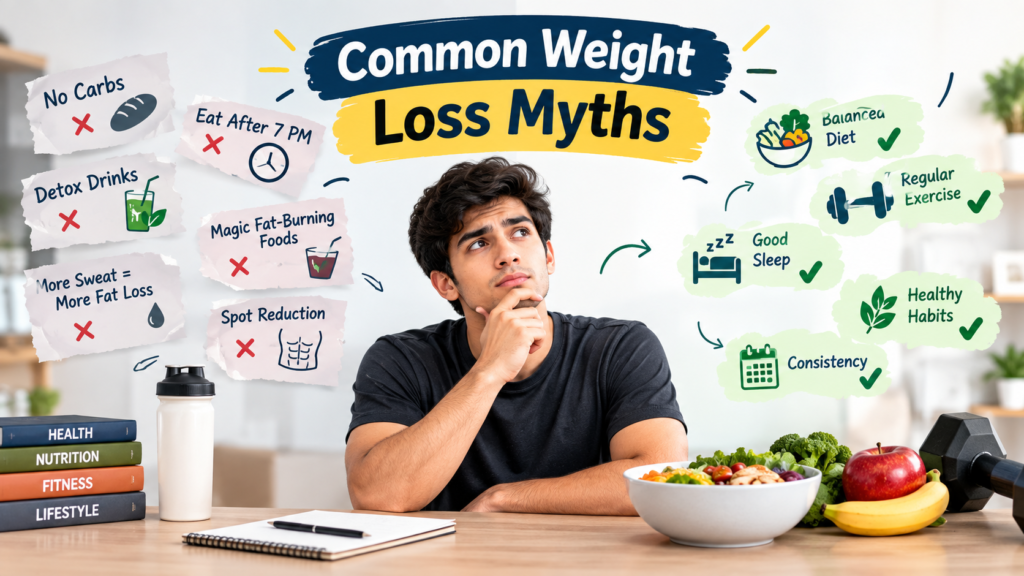
These common weight loss myths can make fat loss seem much more complicated than it needs to be. You may hear that carbohydrates must be eliminated, eating after a certain hour causes weight gain, or that a particular drink can melt belly fat. Following these claims can lead to unnecessary restrictions, frustration, and constantly changing diet plans.
The reality is that healthy weight management depends on several factors, including overall food intake, physical activity, sleep, habits, and consistency. There is rarely a single food, exercise, or timing rule that determines your results.
This guide breaks down some of the most common weight loss myths and explains what they actually mean in the context of healthy, sustainable fat loss. Understanding common weight loss myths can help you make more informed decisions about your diet and exercise routine.
Why Is Weight Loss Information So Confusing Today?
- Social Media and Viral Fitness Advice
Social media has made fitness and nutrition information easier to access than ever. However, accessibility does not always mean accuracy.
Short videos often simplify complicated topics into statements such as “never eat carbs,” “do this before breakfast,” or “drink this every morning to burn fat.” These claims are easy to understand and share, but they may leave out important context. This is one reason common weight loss myths can spread quickly across social media platforms.
A person’s individual experience can also be presented as proof that a particular method works for everyone. In reality, weight-management results can differ because of differences in eating habits, activity levels, body composition, sleep, genetics, medications, and other factors.
- Conflicting Diet Claims and Quick-Fix Promises
One week, a particular food may be promoted as the secret to weight loss. The next week, another diet may be presented as the solution.
Quick-fix claims are especially attractive because they promise major results with little effort. However, sustainable weight management generally requires habits that a person can maintain over time rather than a short-term extreme approach. Many common weight loss myths are built around the promise of fast results with minimal effort.
- Why One Person’s Weight Loss Experience Does Not Prove a Rule
Personal success stories can be motivating, but they should not automatically be treated as scientific evidence.
If someone loses weight after removing carbohydrates, for example, it does not necessarily mean carbohydrates were the reason they lost weight. They may also have reduced their overall calorie intake, changed portion sizes, increased activity, or made several lifestyle changes at the same time. Common weight loss myths often begin when one person’s experience is presented as a universal rule.
- The Difference Between Evidence-Based Advice and Anecdotal Claims
Evidence-based information considers research rather than relying only on individual stories.
This does not mean every person’s experience is irrelevant. Instead, it means personal experiences should be viewed in context. A sustainable approach should be based on established principles while allowing room for individual preferences and circumstances. Recognizing common weight loss myths makes it easier to separate personal stories from evidence-based information.
Who Is This Guide For?
This guide is designed for anyone who wants to understand weight loss without getting trapped by confusing diet trends.
It can be particularly useful for:
- Beginners who are starting their weight-loss journey
- People who frequently see conflicting fitness advice online
- Anyone considering an extreme diet
- People who want to understand the difference between fat loss and temporary weight changes
- Anyone looking for sustainable healthy habits
- People who want to evaluate weight-loss claims more critically
The goal is not to promote one specific diet. It is to help you understand the basic principles behind fat loss so you can make more informed decisions.
The Most Common Weight Loss Myths You Should Stop Believing

Myth 1: You Need to Completely Avoid Carbs to Lose Weight
Carbohydrates are often blamed for weight gain, but eliminating them is not automatically necessary for weight loss.
Carbohydrates are one of the body’s main sources of energy. Foods such as fruits, vegetables, legumes, and whole grains can provide carbohydrates along with fiber, vitamins, minerals, and other nutrients.
A person’s overall dietary pattern matters much more than simply labeling carbohydrates as “bad.” Some people may prefer a lower-carbohydrate diet, while others may find a balanced diet that includes carbohydrates easier to maintain. This is one of the common weight loss myths that can make people unnecessarily afraid of carbohydrates.
The important consideration is whether the overall eating pattern supports an appropriate energy intake and provides adequate nutrition.
Myth 2: Eating After 7 PM Automatically Causes Weight Gain
There is nothing magical about 7 PM that suddenly changes food into body fat.
Body weight is influenced by overall energy intake and expenditure, along with many other factors. The timing of meals can affect individual eating patterns, sleep, hunger, and food choices, but simply eating after a specific clock time does not automatically cause fat gain.
For some people, late-night eating may make it easier to consume extra snacks or large portions. For others, having dinner later may fit normally into their schedule. The belief that a specific evening time automatically causes weight gain is another example of common weight loss myths.
Instead of focusing on an arbitrary cutoff time, consider your total eating pattern and whether your meal schedule is sustainable.
Myth 3: You Must Eat Very Little to Lose Weight Fast
Extreme calorie restriction can make a diet difficult to maintain and may leave people feeling excessively hungry or fatigued.
Fast changes on the scale can also reflect changes in water and stored carbohydrate rather than purely changes in body fat.
A more sustainable approach generally focuses on creating a reasonable calorie deficit while still consuming enough nutritious food to support normal daily activities and exercise.
The objective should not simply be to make the scale drop as quickly as possible. Long-term consistency matters. Common weight loss myths about eating as little as possible can make sustainable fat loss unnecessarily difficult.
Myth 4: Certain Foods Automatically Burn Body Fat
You may have heard that specific foods or drinks “burn fat.” This is one of the most persistent diet claims.
Foods such as green tea, chili peppers, lemon, or other ingredients may have nutritional properties that are useful as part of a balanced diet, but they should not be viewed as magic fat-burning solutions.
Fat loss primarily depends on the overall relationship between energy intake and energy expenditure over time. Adding one food to an otherwise unchanged diet does not automatically produce significant fat loss.
Instead of searching for a magical food, focus on a dietary pattern that you can follow consistently. This is an important distinction when evaluating common weight loss myths about so-called fat-burning foods.

Myth 5: Drinking Warm Water Melts Belly Fat
Warm water can be a pleasant way to stay hydrated, but it does not selectively melt abdominal fat.
Hydration is important for normal body functions, and drinking water instead of high-calorie beverages can sometimes help reduce overall calorie intake. However, the temperature of the water does not provide a shortcut to targeted fat loss.
If you enjoy warm water, there is no problem with including it in your routine. Just avoid treating it as a substitute for balanced nutrition and regular physical activity. The warm-water claim is one of the common weight loss myths that can distract people from sustainable habits.
Myth 6: You Can Lose Belly Fat With Ab Exercises Alone
Exercises such as crunches, planks, and leg raises can strengthen abdominal muscles, but exercising a particular body part does not guarantee that the body will remove fat from that exact area.
This is commonly referred to as spot reduction.
Overall fat loss occurs as the body uses stored energy, and where fat is lost first or last can vary between individuals. Genetics, sex, age, and body composition can influence fat distribution.
Abdominal exercises are still valuable because they can strengthen the core. They simply should not be marketed as a guaranteed method for specifically burning belly fat. The belief that abdominal exercises can directly remove belly fat is one of the common weight loss myths surrounding exercise and fat loss.
Myth 7: More Sweat Means More Fat Loss
Sweating is primarily a mechanism the body uses to regulate temperature.
A person may weigh slightly less immediately after a very sweaty workout because they have lost water. Once fluids are replaced, that temporary weight change can disappear.
Therefore, the amount of sweat on your clothes is not a reliable measurement of how much body fat you have lost. Common weight loss myths about sweating can make temporary water loss look like meaningful fat loss.
Exercise should instead be evaluated through factors such as consistency, performance, fitness improvements, and its contribution to an active lifestyle.
Myth 8: Skipping Meals Is the Best Way to Lose Weight
Skipping meals is not automatically a superior weight-loss strategy.
Some people naturally prefer fewer meals or time-restricted eating patterns, while others become extremely hungry when they skip meals and may compensate by eating larger portions later.
What matters is whether the overall eating pattern helps a person manage their food intake while meeting nutritional needs.
If skipping breakfast works comfortably for someone, that does not make breakfast universally unnecessary. Likewise, someone who prefers regular meals does not need to force themselves into a fasting schedule. Common weight loss myths about meal frequency can make people believe there is only one correct way to eat.
Myth 9: Detox Drinks and Cleanses Remove Body Fat
Detox products are frequently promoted as a way to “flush out toxins” and accelerate weight loss.
The body already has systems, including the liver and kidneys, that perform important functions related to processing and removing waste.
Some detox programs may cause short-term weight changes because they involve consuming fewer calories or losing water. That does not necessarily mean a meaningful reduction in body fat.
Rather than relying on cleanses, focus on a nutritious eating pattern, adequate hydration, regular movement, and sustainable habits. Detox claims are another area where common weight loss myths can create unrealistic expectations about fat loss.
Myth 10: A “Healthy” Food Can Be Eaten in Unlimited Amounts
Healthy food and low-calorie food are not always the same thing.
Nuts, seeds, nut butters, oils, avocados, and other nutrient-dense foods can be valuable parts of a balanced diet while also being relatively energy-dense.
This does not mean these foods should be avoided. It simply means portion sizes still matter when managing total energy intake.
A healthy diet is not about finding foods that can be eaten without limits. It is about creating a balanced overall pattern that provides nutrients while matching your individual energy needs. Common weight loss myths can sometimes confuse the idea of healthy food with the idea of unlimited food.
Myth 11: Carbs at Night Automatically Turn Into Fat
Another variation of the carbohydrate myth is the belief that eating carbs at night automatically causes them to become body fat.
The body does not follow such a simple clock-based rule.
The overall amount of food consumed, activity levels, dietary composition, and individual circumstances all matter. For someone who exercises in the evening, carbohydrates can even be a normal part of a post-workout meal.
Instead of fearing nighttime carbohydrates, look at your complete diet and whether your eating habits support your goals. This is another example of how common weight loss myths can turn normal eating habits into unnecessary restrictions.
Myth 12: Weight Loss Supplements Are Necessary for Fat Loss
Supplements are often marketed using phrases such as “rapid fat burner,” “metabolism booster,” or “effortless weight loss.”
However, a supplement is not a requirement for achieving healthy weight loss.
The foundation should generally be a nutritious eating pattern, appropriate physical activity, adequate sleep, and sustainable habits. Products marketed as shortcuts deserve careful evaluation, especially when they make dramatic promises. Common weight loss myths about supplements can make these products appear more essential than they actually are.
If you are considering a supplement, understand what it contains and consider discussing it with an appropriately qualified healthcare professional.
The Danger of Unverified Fitness and Diet Trends
Many common weight loss myths continue to circulate because misleading claims are often easier to promote than balanced explanations.
- How Misleading Weight Loss Claims Spread Online
A claim can become popular online because it is entertaining, emotional, or easy to explain—not necessarily because it is well supported by evidence.
Algorithms can also repeatedly expose people to similar content, making a claim appear more credible simply because they see it frequently.
Popularity should not be confused with scientific support. This is particularly important when evaluating common weight loss myths shared through viral fitness content.
- Why Before-and-After Photos Can Be Misleading
Before-and-after images can show real changes, but they rarely tell the entire story.
Lighting, posture, clothing, camera angles, hydration, and timing can influence how a person looks. In addition, photographs do not show the full diet, exercise routine, lifestyle, or health history behind the change.
A transformation photo can be interesting, but it should not be treated as proof that a particular method will produce the same result for everyone. Before-and-after content can therefore contribute to common weight loss myths when important context is missing.
- The Problem With Extreme 7-Day and 30-Day Challenges
Short challenges can sometimes encourage people to become more active, but problems arise when they promise dramatic fat loss within an unrealistic timeframe.
Extreme restrictions may be difficult to maintain and can create an unhealthy cycle of strict dieting followed by abandoning the plan.
A better goal is to develop habits that still make sense after the challenge ends.
- How to Identify Red Flags in Weight Loss Advice
Be cautious when a product, influencer, or program:
- Promises effortless or guaranteed weight loss
- Claims one method works for absolutely everyone
- Encourages extreme food restriction
- Uses fear to sell a product
- Describes a normal food as a “secret fat burner”
- Promotes rapid results without explaining the process
- Relies entirely on testimonials rather than evidence
- Tells you to ignore qualified professional advice
These signs do not automatically prove that every claim is false, but they are reasons to investigate the evidence more carefully. Knowing these warning signs can help you identify common weight loss myths before they influence your choices.
The Real Path to Healthy Weight Loss

- Focus on Sustainable Eating Habits
Healthy weight management does not require a perfect diet.
Build meals around nutritious foods that you enjoy and can realistically afford and prepare. Consistency is usually more useful than following a highly restrictive plan for a short period.
- Create a Realistic Calorie Deficit
Fat loss generally requires the body to use more energy over time than it receives from food and beverages.
A realistic calorie deficit is usually easier to maintain than an extreme restriction. The appropriate approach can vary based on individual circumstances.
- Prioritize Protein and Nutrient-Dense Foods
Protein can help support muscle maintenance and contributes to feelings of fullness. Nutrient-dense foods can also help provide the vitamins, minerals, fiber, and other nutrients your body needs.
Rather than focusing only on calories, consider the nutritional quality of your overall diet.
- Combine Strength Training With Regular Physical Activity
Strength training can help build or maintain muscle, while activities such as walking, cycling, running, swimming, or other forms of movement can contribute to overall physical activity. For more practical ideas, you can also explore our guide to Top 10 Fat Burning Exercises.
You do not necessarily need a complicated exercise program. A routine that fits your schedule is more practical than a perfect plan that you cannot maintain.
- Get Enough Sleep and Manage Daily Stress
Weight management is not only about food and exercise.
Sleep and stress can influence appetite, food choices, energy levels, recovery, and daily activity. Building a healthy routine therefore means looking at the broader lifestyle rather than focusing on one isolated habit.
- Track Progress Beyond the Number on the Scale
Body weight naturally fluctuates.
Changes in water retention, food intake, sodium consumption, digestion, and other factors can affect the number on the scale.
Depending on your goals, you may also consider changes in waist measurements, fitness performance, strength, energy levels, and consistency with healthy habits.
- Give Your Body Time to Adapt
Sustainable progress often requires patience.
Expecting dramatic changes every few days can make normal fluctuations feel like failure. Instead, look at trends over a longer period and focus on whether your habits are moving in a sustainable direction.
How to Tell if Weight Loss Advice Is Actually Evidence-Based

- Check Who Is Making the Claim
Consider the qualifications and expertise of the person providing the information.
A fitness creator may have useful exercise experience but may not be qualified to provide individualized nutrition or medical advice. Similarly, a personal success story does not automatically establish scientific expertise.
- Look for Reliable Scientific Evidence
Look for information supported by credible research, professional organizations, and appropriately qualified experts.
Be especially cautious when a claim is supported only by a testimonial, a single study taken out of context, or a product seller. These checks are especially useful when trying to separate common weight loss myths from information supported by credible evidence.
- Be Careful With “Instant,” “Guaranteed,” and “Secret” Methods
Weight loss is a biological process influenced by multiple factors.
Words such as “guaranteed,” “instant,” and “secret” should make you pause and investigate rather than immediately accept the claim.
- Understand That Individual Results Can Vary
Two people can follow similar routines and experience different results.
This does not necessarily mean one person failed or that the method was useless. Individual factors can influence appetite, activity, body composition, adherence, and changes in body weight.
Common Weight Loss Mistakes That Come From These Myths
- Cutting Out Entire Food Groups Without a Reason
Removing an entire food group simply because it has been labeled “bad” can unnecessarily restrict your diet.
Unless there is a specific dietary, medical, or personal reason, a balanced approach may provide more flexibility.
- Relying on Extreme Diets
Very restrictive diets can create an all-or-nothing mindset. When the diet becomes impossible to follow, people may abandon it completely and then search for another quick solution.
- Focusing Only on Exercise
Exercise is important for health and can support weight management, but food intake and overall lifestyle also matter.If you are looking for specific exercises to include in your routine, see our guide to Top 10 Fat Burning Exercises.
A sustainable approach considers both nutrition and movement.
- Chasing Fast Results Instead of Sustainable Progress
Rapid results can be appealing, but the ability to maintain healthy habits matters just as much as initial progress.
A slower, manageable approach may be easier to incorporate into everyday life.
- Constantly Switching Between Diet Plans
Jumping from keto to fasting to detoxes to another restrictive plan can make it difficult to understand what actually works for you.
Instead, build a consistent foundation and make changes based on your actual needs and progress. Understanding common weight loss myths can help prevent these mistakes and encourage a more sustainable approach.
Frequently Asked Questions About Common Weight Loss Myths
These questions address some of the most common weight loss myths people encounter when trying to lose weight.
- What is the biggest myth about weight loss?
One major misconception is that there is a single food, drink, exercise, or diet rule that automatically causes fat loss. In reality, weight management involves multiple factors, including overall energy intake, physical activity, eating patterns, sleep, and consistency.
- Can you lose weight without cutting out carbohydrates?
Yes. Carbohydrates can be part of a healthy eating pattern. Weight loss does not automatically require eliminating an entire macronutrient group.
- Does eating at night cause weight gain?
Eating at night does not automatically cause fat gain simply because of the time on the clock. The overall eating pattern and energy intake are more important considerations.
- Can you target belly fat with specific exercises?
Abdominal exercises can strengthen the core, but they cannot guarantee that fat will be removed specifically from the stomach area. Overall fat loss determines changes in body-fat levels and distribution.
- Do detox drinks help you lose body fat?
Detox drinks should not be considered a reliable shortcut for body-fat loss. Any short-term scale change may reflect factors such as lower food intake or water changes rather than significant fat loss.
- Does sweating more mean you are burning more fat?
No. Sweating mainly helps regulate body temperature. Losing water through sweat can temporarily lower body weight, but this is different from losing body fat.
- What is the most sustainable way to lose weight?
A sustainable approach generally combines nutritious eating, a manageable calorie deficit when appropriate, regular physical activity, sufficient sleep, and habits that can realistically be maintained over time.
Conclusion
Understanding common weight loss myths is an important step toward making smarter decisions about nutrition, exercise, and healthy habits. You do not need to follow every viral diet trend, eliminate entire food groups, rely on detox drinks, or search for a magical fat-burning food to make progress.
The more useful approach is to focus on the fundamentals: a balanced eating pattern, appropriate energy intake, regular movement, strength training, adequate sleep, and consistency. Learning to recognize common weight loss myths can help you avoid unnecessary restrictions and focus on habits that are easier to maintain. At the same time, learning how to evaluate fitness claims can help you recognize exaggerated promises before they influence your decisions.
Weight loss is not a race to find the most extreme strategy. It is a process of building habits that support your health and that you can realistically continue. When you understand the difference between popular claims and evidence-based principles, you can spend less time chasing diet traps and more time developing a sustainable approach to your goals.